 Dear Reader,
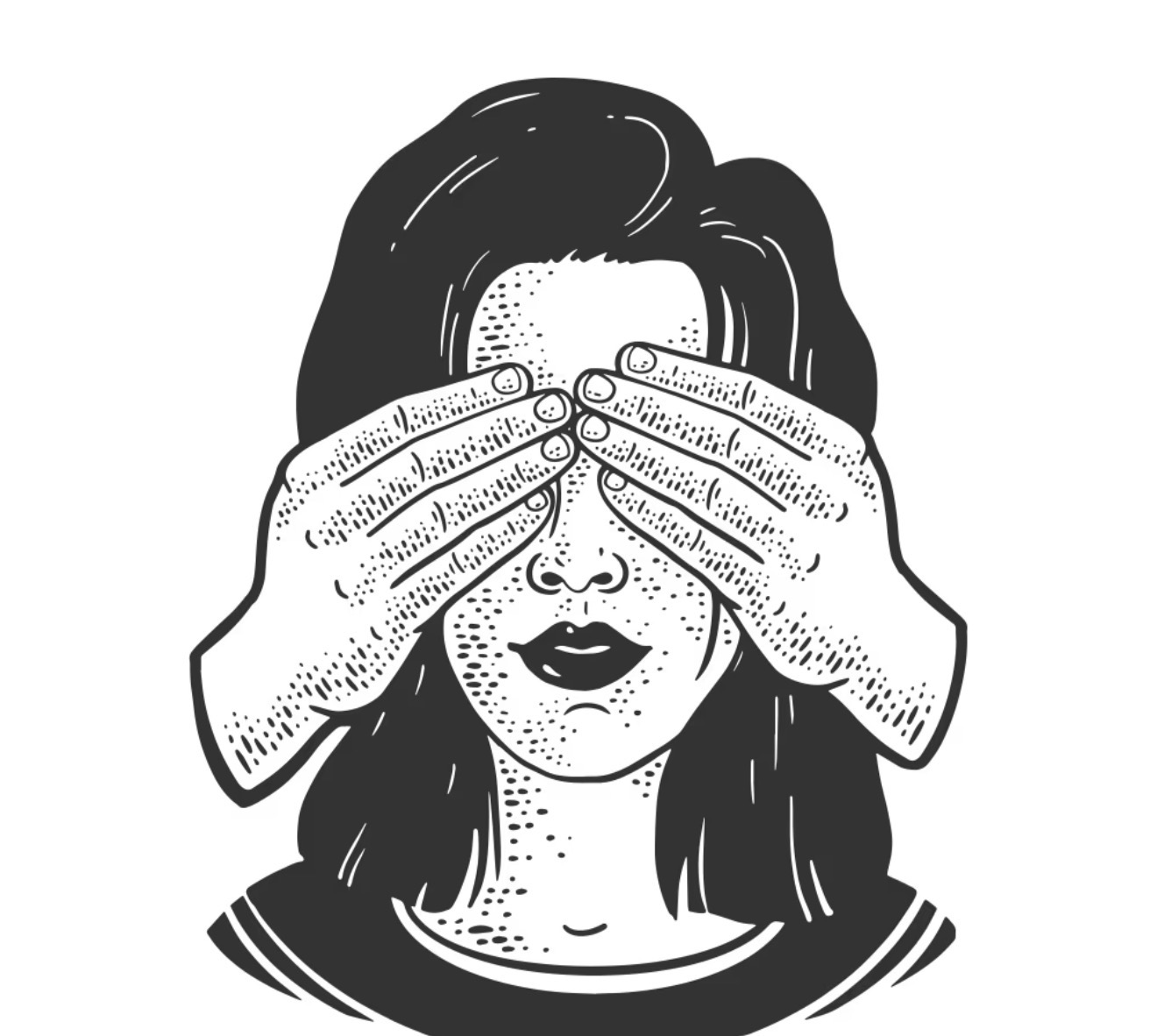
There are moments in one's life when the world as you know it—the very ground beneath your feet, the air you breathe, the truth you've built your entire existence upon—reveals itself to be nothing more than a carefully constructed fiction. A pretty lie told so often, so convincingly, that even the most intelligent among us can live inside it for decades without ever questioning its foundation. But this is not a story about innocent ignorance. This is a story about choice. About the small, daily decisions we make to look away, to rationalize, to tell ourselves comfortable lies because the truth would require us to act. And action, dear reader, is so very inconvenient.
(This Author does so love a tale of moral reckoning. And this one, I assure you, is particularly devastating.)
Let us begin where all good Southern stories begin: with family, with place, and with the dangerous comfort of belonging.
THE BEAUTIFUL LIE
Magnolia Falls, Georgia, in the year 2000, was the kind of town that appeared in glossy magazines under headlines like "Best Places to Raise a Family" and "Small Town Charm Meets Modern Living."
(And indeed, it did appear in such publications. The irony, as you will soon discover, is almost too perfect.)
Picture, if you will, a charming Main Street lined with antique shops and local businesses. A town with a Smithsonian-affiliated museum celebrating Civil War history. A community where neighbors knew each other's names, where the quaintness of celebrating the 4th on the 3rd of July concert and fireworks were a sacred tradition, where the little league baseball and high school football brought everyone together on weekends. This was the Magnolia Falls that our chiropractor believed in. This was the town she had known. The place where her parents had built not just a chiropractic practice, but a legacy. Her dad was so beloved, so respected, that he would eventually serve on the city council. A man who helped create that beautiful museum, who invested in the community's future, who believed in Magnolia Falls's potential. And she? She was her father's daughter in every way that mattered. She had watched him build something meaningful, and she wanted to do the same.
So in the year 2000, she made a decision that would alter the course of her life in ways she could never have imagined. She took her father's retirement money—every penny of it, dear reader—and her husband’s retirement savings, and they invested it all into Magnolia Falls. She and her father purchased a building on Main Street. They moved their chiropractic practice there. They put down roots so deep, they believed nothing could ever shake them loose.
(This Author must pause here to note the particular cruelty of what comes next. For there is nothing quite so devastating as discovering that the place you loved, the community you invested everything in—your money, your time, your very identity—was built on a foundation you chose not to examine.)
The chiropractor was 30 years old. She was a white woman with every advantage this town could offer. She was educated, successful, respected. She had a family, a thriving practice, a future that looked bright and certain. She believed in Magnolia Falls. And Magnolia Falls, as it turned out, was very good at making people believe.
THE FIRST CRACK
The building they purchased was owned by a local businessman, who also owned the Magnolia Falls Drugstore and was currently housing a second hand store. It was located at the intersection of Main Street and City Hall Street—right in the heart of downtown.
(Remember this intersection, dear reader. It will become important.)
One block away—one single block—stood a shop called The Collector's Civil War Surplus & Herb Shop. The owner, The Collector, was something of a local character. Eccentric, some said. A historian, he called himself. He collected Civil War memorabilia, gave tours, “educated” visitors about the Confederacy. And for years—years, dear reader—the chiropractor would walk past that shop and think, I hate this but I need to mind my own business. It will go away eventually. It’s not my responsibility.
Oh, she knew it was there. Everyone knew it was there. Nine Confederate flags flew outside.
(Nine. This Author feels compelled to emphasize this number.)
A sign adorned the front door that read “White History Year”. In years past he would celebrate James Earl Ray day while the rest of the country celebrated MLK Day. The windows were cluttered with relics and artifacts. It was the kind of place tourists photographed, the kind of quirky local business that gave a town "character." But she didn't go inside. Not for a long time. Why would she? She was busy building a practice, seeing patients, raising a family. She was part of the community now, invested in its success. And besides, it was just a shop. Just history. Just heritage.
(Just. That word does so much work in the service of willful blindness, does it not?)
Until one day—and she cannot remember exactly when, only that it happened gradually, the way oceans change and mountains rise -patients started coming into her office with a particular look on their faces. Confusion. Disgust. Horror. "What in the hell was that?" they would ask. And the chiropractor would say the exact same thing every single time: "I don't know. I've never been in there. Every village has someone like him." But the questions kept coming. And eventually, curiosity—or perhaps some deeper instinct she didn't yet recognize—compelled her to see for herself what was causing such reactions.
(This Author must warn you, dear reader: what comes next is not pleasant. But it is necessary. For we cannot understand this woman's eventual awakening without understanding what she chose to ignore for so very long.)
WHAT SHE SAW
The first thing you saw when you walked into The Collector's shop was a Ku Klux Klan robe. Not hidden in the back. Not tucked away in some dusty corner. Right there, in the front, where anyone—including children—could see it the moment they crossed the threshold. Next to the robe hung a noose. On the wall was a photograph of a large tree with Black people hanging from it—people with Afros, people who had been lynched—labeled "the hanging tree." On the counter sat a Brillo pad with a handwritten sign: "N****r Hair There were Jim Crowe caricatures of Black children eating watermelon. There was cotton labeled as "n****r repellent." There were postcards of lynchings sold as souvenirs. And in the back, The Collector had created what he called a "museum"—a collection of Confederate relics displayed alongside the most hateful imagery imaginable. He considered himself a historian. He gave tours. He “educated” people about the Confederacy with pride.
(This Author finds herself at a loss for words, which is a rare occurrence indeed. How does one adequately convey the horror of such a place? How does one describe the casual cruelty of displaying instruments of terror and death as though they were merely interesting artifacts? How does one explain that this shop existed not in 1950, not in 1920, but in the year 2000 and beyond?)
The chiropractor stood in that shop and felt the ground shift beneath her feet. This wasn't history. This wasn't heritage. This was hatred, pure and simple, displayed openly for anyone to see. And it was one block from her office. One block from where she worked every single day. One block from the heart of downtown Magnolia Falls. One block from city hall.
THE COMFORTABLE LIE
When she walked back to her office that day, she was shaking. Patients would continue to come in, disturbed by what they'd seen. And now, instead of saying "I don't know, I've never been in there," the chiropractor developed a new answer. A better answer. An answer that would allow her to sleep at night. "There is nothing I can do about it," she would say, her voice steady, reasonable. "But once The Collector passes, the building will have to be brought up to code, and it will take care of itself."
(Oh, dear reader. This Author must pause here, for this is the moment. This is the choice. Not the choice to be ignorant—for she was no longer ignorant. But the choice to be complicit.)
It was such a reasonable answer, was it not? So practical. So measured. It acknowledged the problem while simultaneously absolving her of any responsibility to address it. It kicked the can down the road. It buried her head in the sand. It gave her permission to do nothing. And doing nothing, dear reader, is so very comfortable. She said it to patients. She said it to herself. She said it like a mantra, like an incantation, like if she just said it enough times, it would become true. The problem would solve itself. Time would take care of it. Someone else—the building code, the city, fate itself—would intervene. She didn't have to act. She didn't have to risk anything. She didn't have to confront the uncomfortable truth that her beloved Magnolia Falls, the town she had invested everything in, was a place where a Klan robe and a noose could hang one block from city hall.
(This Author knows what you are thinking. You are thinking: surely she knew better. Surely she understood what her silence meant.)
And you would be right. She did know. Deep down, in that place we all have where uncomfortable truths live, she knew.
But here is what the chiropractor did not yet know—or perhaps, what she chose not to know: Until 1996—just four years before she invested everything in this town—Klan rallies were held at the intersection of Main Street and City Hall Street.
(Yes, dear reader. That intersection. The one where her office was located. The one in the heart of downtown.)
Confederate flags flew on Main Street. Nine flew outside The Collector's shop. One flew on city property and would continue to fly there until 2022— 22 years after she moved her practice to Main Street. For 22 years, her office would be one block from The Collector's shop. For 22 years, people would walk into that shop with their children and see a Klan robe, a noose, and a hanging tree. For 22 years, they would see Jim Crowe caricatures and cotton labeled as "n****r repellent." And then they would walk into her office—the next open business—and ask, "What in the hell was that?" For 22 years, she would give them the same answer: "There is nothing I can do. Once The Collector passes, it will take care of itself." For 22 years, she would choose comfort over conscience. (Until she couldn't anymore.)
THE PRIVILEGE OF LOOKING AWAY
(This Author must now address something uncomfortable, something the chiropractor herself would later come to understand with painful clarity.)
She was a white woman in a predominantly white town. She had privilege—not just the privilege of not having to see, but the privilege of choosing not to act even after she had seen. She had the privilege of saying "There is nothing I can do" and having people accept that answer. The privilege of believing that waiting for The Collector to die was a reasonable solution. The privilege of thinking that her inaction was somehow neutral, somehow not a choice in itself. Because for her, Magnolia Falls was a beautiful place. A place of opportunity and community and belonging. The Klan robe and the noose were aberrations, unfortunate relics that would eventually disappear on their own.
But for others? For the Black families who lived there? For the people who saw those Confederate flags and that Klan robe and that noose every single day? Magnolia Falls was something else entirely. And the most insidious part of her comfortable lie was this: it allowed her to consider herself a good person. A person who wasn't racist. A person who was horrified by what she saw in The Collector's shop. A person who cared. But caring without action is just another form of complicity.
(And complicity, dear reader, is perhaps the most dangerous thing of all. Because it allows systems of hatred to flourish while good people tell themselves they are powerless to stop it.)
She could have spoken out. She could have organized. She could have demanded that the city intervene. She could have made it uncomfortable for The Collector to operate his shop of horrors one block from city hall. But she didn't. Because she had invested her father's retirement and her husbands retirement in this town. Because she had built a life here. Because she had a practice to run and a family to raise. Because speaking out would have been inconvenient. Because it might have cost her something. So instead, she waited. She told herself there was nothing she could do. She told herself it would take care of itself. She chose comfort. She chose silence. She chose to look away.
(Until the day she couldn't anymore.)
THE AWAKENING THAT WASN'T
But the chiropractor had seen inside The Collector's shop now. She had seen the Klan robe and the noose and the hanging tree. She had seen the Brillo pad and the cotton and the postcards of lynchings and a business card do Klan meetings. And once you see something like that, you cannot unsee it. Questions began to form in her mind. Uncomfortable questions. Dangerous questions.
If this shop could exist one block from city hall, what did that say about the city?
If Confederate flags could fly on city property, what did that say about the people in charge?
If Klan rallies could be held in the heart of downtown until just four years ago, what did that say about the community she had invested everything in?
(This Author can tell you exactly what it said. But the chiropractor was not ready to hear it yet. Not fully. Not in a way that would require her to act.)
Not yet. For now, she continued to see patients. She continued to build her practice. She continued to live in Magnolia Falls and tell herself—and anyone who asked—that there was nothing she could do. That it would take care of itself. That waiting was the same as acting. She continued to choose comfort over conscience.
But the questions kept growing. And the evidence kept accumulating. And the weight of her own complicity kept pressing down on her, heavier and heavier, until one day it would become unbearable.
And then, in 2008, something happened that she could not explain away. Something that forced her to confront not just the truth about Magnolia Falls, but the truth about herself. About the choices she had made. About the years she had spent looking away. Something that would transform her from a woman who chose comfort into a woman who would spend the next decade fighting to expose the ugly truth—and paying the price for her years of silence.
(But that, dear reader, is a story for next week.)
A FINAL WORD
This Author knows what you are thinking. You are thinking: surely someone did something.
Surely the city intervened.
Surely there were complaints, investigations, consequences.
And you would be right to think that. Because there were complaints.
Many complaints.
For years.
But here is what the chiropractor would eventually discover: the city did not just allow The Collector's shop to exist. The city protected it. And when she finally understood why—when she finally saw the connections between The Collector's shop and the people in power, when she finally recognized the system that allowed such hatred to flourish in plain sight—she would make a choice that would cost her everything.
But we are getting ahead of ourselves again.
For now, let us leave our chiropractor in 2000, on the cusp of an awakening she cannot yet imagine.
Let us leave her still telling herself that there is nothing she can do.
Let us leave her still invested—financially, emotionally, spiritually—in the comfortable lie.
Let us leave her still choosing to look away.
Because the truth, dear reader, is coming.
And it will shatter not just her understanding of Magnolia Falls, but her understanding of herself. Of the years she spent in silence. Of the price that silence extracted from others while she told herself she was powerless. The reckoning is coming. And it will be merciless.yes
Next week: The Moment Everything Changed
Until then, dear reader, this Author remains yours in revelation,
The Whistle Stop
Comments
Post a Comment